Forum Ventures
January 26' Deal Flow
13+ B2B companies actively raising pre-seed and seed rounds.
Browse and book founders directly!

The Profit Layer for Institutional Crypto
📍 Jackson, WY
KEG Systems is building the institutional profit layer for crypto, a compliance-native arbitrage platform that embeds directly into bank and corporate infrastructure to unlock hidden yield from existing client flows.
Designed for regulated environments, KEG processes crypto transaction flows in real time and executes parallel arbitrage opportunities across 300K+ liquidity pools without altering pricing, routing, or client intent.
The platform is the product of Jeff Ross, who left medical school to build institutional trading systems on Wall Street over 17 years ago. There, he ran high-frequency FX desks at three hedge funds, owning the full stack end-to-end - coding, server and network setup, execution, bank integrations, credit, and risk-trading billions through Tier-1 banks without a losing month across crises including 2008 and 2020. KEG packages that same institutional-grade infrastructure as a SaaS platform, turning production trading systems into a compliant revenue engine for banks and corporates moving into crypto.
- First deployment in Feb 2026, a $6M ARR contract
- Self-funded with $3.4M, by executing live profitable trades on the platform, and entering pilot discussions with major institutions via Jeff’s existing capital markets network.
- Banks and corporates touch trillions in crypto flows and KEG turns that flow into a profit center in a market projected to exceed $10T annually.


Where Excess Inventory Meets True ROI
📍 Chicago
The U.S. sees $1.8T worth of excess inventory sitting idle in 20,000 3PLs (warehouses) annually. Current solutions that promise to move this inventory are highly ineffective, and return negative ROI. Liquidation takes on average 16 weeks and returns .08 on the dollar. Disposal has zero return and costs on average $100/pallet.
Donation changes the math. Through donation inventory moves in hours vs weeks and returns .75 on the dollar through tax incentives. Stock is the platform and private marketplace that connects excess inventory to the 1.5M nonprofits in the US for inventory donation.
Stock’s platform handles the full donation workflow from matching inventory, coordinating transportation, and managing documentation, allowing brands to reduce storage costs, recover value, and convert excess inventory into measurable impact and tax harvests within hours.
Founded by Abby Nawrocki, former leader of US Supply Chains for Zara, Apple, SKIMs, Uniqlo and Deliverr (exit to Shopify $2.3B), Stock addresses one of the Supply Chain's most persistent inefficiencies with a scalable, impact-driven solution.
- Early Users: Shipmonk, Flexport, Stord, Rover, Portland Leather Goods, Walmart and many more
- MoM Listing Growing by 356% with 72% repeat customers.
- Average Revenue per Transaction: $1,040
- Total GMV Donated: $15,457,925
- Total Units Donated: 889,701


Securing The World’s Offshore Infrastructure
📍 San Francisco
Maritime commerce powers over 80% of global trade and depends on more than $4.5 trillion in offshore infrastructure, spanning energy, communications, transportation, and defense. Yet over 75% of this infrastructure is under-protected or completely unmonitored, exposing the backbone of the global economy to catastrophic failure.
SpaceTime Robotics builds autonomous surface and subsea systems that deliver continuous monitoring and real-time threat detection, starting with subsea cables and ports. Subsea cables alone carry 99% of internet traffic and support trillions in daily financial activity. A single fault can cripple entire regions for weeks. Port infrastructure faces similar threats, with limited oversight and reactive incidents.
SpaceTime’s un-crewed systems provide persistent, intelligence monitoring in high-stakes marine environments, detecting anomalies before damage occurs.
- Signed LOI with a top global subsea cable operator, representing up to $3M in potential contract value
- Founding team has built and deployed mission-critical systems across space, defense, fintech, and biotech, including flight hardware at NASA, large-scale platforms at Visa, and regulated systems in enterprise biotech
- Targeting a $200B+ maritime infrastructure security and monitoring market
- Backed by Forum Ventures, Draper University, and University of San Diego

AI-Native Law Firm
📍San Francisco
Shepherd is an AI-native law firm built specifically for startups. By combining experienced attorneys with cutting edge AI, Shepherd delivers core legal work 5–10× faster and cheaper than traditional firms.
Founders pay a flat monthly subscription ($500–$2,500) for unlimited contract work, NDAs, employment agreements, vendor contracts, and customer MSAs, with 48-hour turnaround, eliminating weeks of billable-hour friction.
Unlike incumbents that sell AI tools to law firms or focus upmarket on large enterprises, Shepherd targets early-stage founders who actively seek alternatives to expensive, slow legal services.
With an experienced operator-led founding team and senior legal leadership from global enterprises, Shepherd is launching into a large, underserved market with a scalable, subscription-driven legal workflow platform spanning formation, fundraising, HR, contracts, and compliance.
- Founder is a seasoned business executive, former early business hire & Senior Director at Fundbox, VP of Revenue & Ops at Counterpart and COO of Capstack (exit). Chief Legal Officer is former SVP of Legal at Experian and Neuro ID.
- 25 companies have signed up for beta testing, and through Forum and LP relationships, we have direct access to 2000 startups. Going live with customers in February.
- Clear, unmet market need: Existing competitors are focused up market on large companies or sell AI software to existing law firms. There is white space to service early-stage founders and companies that actively seek out options outside of expensive law firms.
- Large, recurring revenue opportunity: Subscription-based legal workflows spanning formation, fundraising, HR, contracts, and compliance- driving predictable, high-margin SaaS and legal services revenue.



The Financial OS for the Production Economy
📍 Toronto
Producers and Project Managers control $1T+ in annual global spend yet still rely on spreadsheets, inboxes, and ERPs never built for them. Despite being closest to both the work and the money, they have no system that connects project execution with financial control in real time.
MakeOS is the first producer-centric financial OS, a system of record that collapses project management and financial workflows into one surface, where producers can plan, commit, pay, and reconcile spend as they deliver.
- Built by the team behind Makers Inc. bootstrapped to $30M annual revenue serving 100+ global brands now converting services trust into SaaS scale.
- Real traction, proven demand: $80M+ in spend processed, 2,000+ projects completed, $2.94M in ARR pipeline, with enterprise pilots underway at Pinterest, Sephora, and Fiserv.
- Clear monetization, fintech upside: SaaS-first with fintech take rates on spend — following proven models like Ramp and ServiceTitan.


The Control Layer for an Energy-Constrained World
📍 San Francisco
As AI workloads surge and climate-driven demand spikes, energy, not compute, is becoming the bottleneck for physical infrastructure. Legacy BMS platforms, static logic, and fragmented controls can't adapt to real-time demand. In the U.S. alone, inefficient building operations drive $250B+ of avoidable energy waste each year.
Brick is building the AI-native control plane to solve this.
Its universal gateway integrates directly with existing systems, using reinforcement learning to dynamically optimize HVAC and industrial operations across buildings, factories, and data centers - including deployments with JLL, Lucid Motors, and Equinix. The result: autonomous infrastructure that adapts in real time to maximize efficiency, resilience, and cost savings.
With $850K+ in ARR, $3M in late-stage pipeline, and a $250B+ serviceable market, Brick is establishing the control layer for the physical world.
- ~200% QoQ growth, 25+ live deployments and 50+ pipeline projects across healthcare, industrial, and data-center sites in the U.S. and Asia.
- Delivering 25–35% verified energy savings with sub-3-month paybacks for customers.
- Led by a 15-year energy-sector CFO with one prior exit, an award-winning ML/RL researcher, and senior operators from Honeywell and Marvell.


AI-Native OS For City Planning
📍 San Francisco
The U.S. loses over $2T annually in productivity due to slow housing and infrastructure permitting, prompting federal action through the SPEED Act and the White House AI Action Plan to modernize current regulations and processes. Yet most city and state permitting workflows remain paper-based, fragmented, and understaffed, creating months-long delays driven by incomplete applications and manual code reviews.
Emulate Cities is building an AI-native OS for city planning, starting with automated permit review. The AI platform checks applications for compliance, flags issues, and generates staff-ready reviews in minutes instead of weeks. Local governments can approve, comment, and navigate issues seamlessly, while applicants submit error-free permit applications on the first pass. Emulate is live across multiple U.S jurisdictions, processing thousands of permits annually.
- Paid deployments with Tahoe Regional Planning Agency, Norwalk Redevelopment Agency, and Tulare County Resource Management Agency
- In six months, $0 → $32K+ ARR with an $12M ARR pipeline from jurisdictions across the U.S
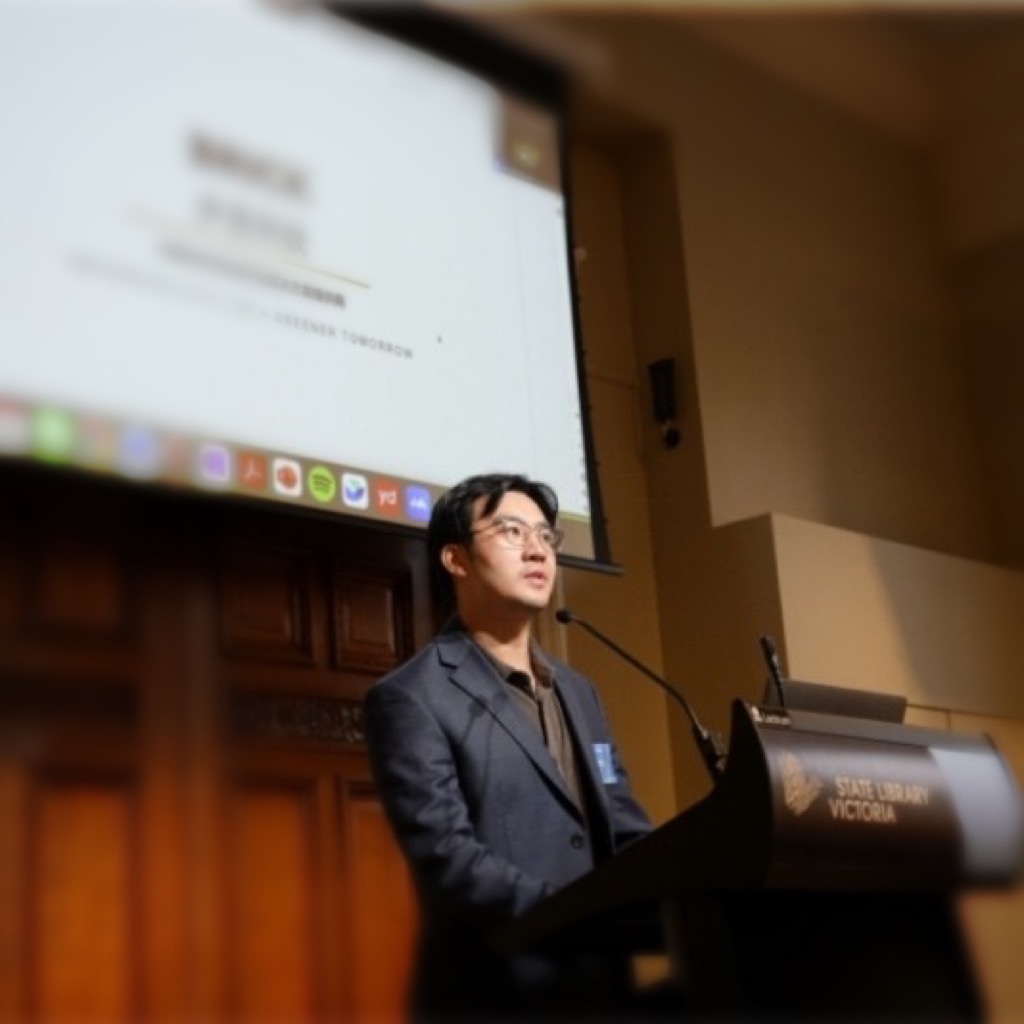
- Founded by an urban planner with 10+ Yrs XP (Ex-UN, Rockefeller Foundation and Indian Housing Secretary’s Special Task Force) and an Amazon ML Engineer, with a PHD in AI/ML; University of Cambridge and Machine Learning for the UK’s National Health Service


The AI Reputation Platform
📍 Seattle
As consumer behavior shifts from traditional search to AI-generated answers, the $235B global SEO market is collapsing. The era of “10 blue links” is over, replaced by a single, authoritative response from an LLM. If your brand isn’t surfaced there, it’s no longer even considered.
Optimly helps brands stay relevant in this new paradigm with a platform purpose-built for Generative Engine Optimization. It detects how LLMs interpret and recall your brand, then programmatically creates the right content signals to correct misrepresentation in high-intent AI interactions.
In just 90 days since launch, Optimly has secured $120K in ARR, is in procurement with brands like Discord and Carnival, and is emerging as the go-to infrastructure for the post-SEO era.
- Led by former Head of UX Research and Product Marketing at companies like Discord, Meta, and Microsoft
- $120k in ARR by end of January, expected to reach $500k+ in ARR by Q2 based on current weighted pipeline.
- Delivering 300% increase in AI brand accuracy and >1600% lift in AI-referred traffic, directly attributable to improved presence in high-intent model queries


A Hands-Free, Scan-Less Future
📍 Chicago
Retina Robotics is tackling the inefficiencies of manual inventory management that slow warehouses down and introduce costly errors.
The Retina WAM is a compact, plug-and-play robotic device that mounts to any existing forklift or material handling vehicle. Using onboard computer vision and AI, WAM tracks any type of inventory at all times, with or without a label, and eliminates the need to manually scan, validate, or audit inventory ever again.
This doubles picking and putaway speeds and delivers over 99.99% inventory accuracy. WAM addresses an estimated 850,000 U.S. warehouses that rely on forklifts, representing a $100B annual market opportunity.
- $200K ARR in the first five months
- Signed and deployed across five warehouse customers, including multi-billion-dollar enterprises like Ryder Logistics
- Clear expansion value of the customer base to $9M ARR over a hundred warehouses, to be achieved with 24 months
- Backed by Forum Ventures, Array Ventures, and the State of Illinois



Turning America's Fragmented Machine Shops into a Scaleable, Orchestrated Factory Network
📍 New York
U.S. precision manufacturing is hitting a wall, not because of a machine or CapEx shortage, but a lack of experienced machinists, and their decades of knowledge. As experienced talent retires and demand for precision parts accelerates, shops face a hard ceiling: that local labor constraints limit national capacity, independent of any other variable.
UAME breaks that ceiling by building a decentralized network of independent factories, coordinated by a unified operating platform that aggregates skilled labor and production capacity at scale. Our AI orchestration platform synchronizes planning, quality, and execution across the network, unlocking the first distributed mega-factory.
- $100k in revenue in first months post-launch
- Actively delivering critical components to leading aerospace and defense customers, including: SpaceX and Hermeus
- Founders have built and operated multiple machine shops across tech-enabled and legacy models


The AI-Native Legacy Modernization Platform
📍 Toronto
Enterprises still rely on decades-old COBOL and mainframe systems that are costly, risky, and impossible to scale, while experts retire and regulatory pressure intensifies.
CodeAura uses AI automation to analyze, document, and modernize millions of lines of legacy code, enabling organizations in banking, healthcare, and manufacturing to transform systems 10× faster and at a fraction of traditional cost.
- 3 active PoCs, $30K in initial revenue, and strong inbound demand for large-scale 6M–8M+ modernization programs
- Reseller partnership with Novipro (leading mainframe services in Canada); partnership with Easirun as both client and channel; LOI signed with TDI LatAm, a leading mainframe services provider in Latin America
- CEO is an experienced product leader; CTO has built and scaled multiple multi-million-dollar platforms
- Massive market tailwinds, with AI-powered modernization addressing a $100B+ legacy transformation market with acute talent scarcity


The Hidden Infrastructure Layer for Tapping Idle Compute
📍 San Francisco & Manchester, UK
While hyper-scalers invest billions in new data centers, up to $49B in idle compute sits untapped across existing data centers.
Kalavai unlocks this underutilized capacity into production-ready AI infrastructure at near-zero cost. Their platform helps AI teams cut cloud spend by up to 90% and scale faster from prototype to production, while data centers double their utilization and revenue using the hardware they already own.
- $105K of compute already sourced from partners and $1.5M in GPU capacity expected by year-end
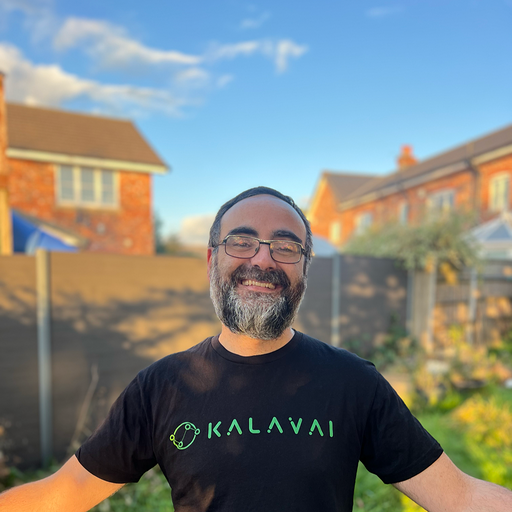
- Led by 2x founder PhD in distributed systems and an ex-Googler (GTM StratOps, scaled $1B SaaS business)
- Backed by Plug & Play, ForumVC and MBA Ventures


Autonomous Foundries for the Future of U.S. Shipbuilding
📍 Florida
U.S. shipbuilders face severe delays and shortages for critical components, with domestic production at historic lows (just 3 ships last year). This has corresponded with a huge spike in demand, and increased appetite for domestically controlled supply chains.
Seawright solves that production gap. Seawright is building autonomous foundries that manufacture maritime components and subsystems 10x faster and at far lower cost, forming the foundation for next-generation, software-defined shipbuilding. The LibertyOS platform orchestrates production workflows and manufacturing processes across a unified, intelligent production system that & learns and improves with from every production run.
- Early traction via 3 pilot agreements with shipbuilders and engagements with government customers
- The team saw first-hand the U.S. shipbuilding shortfalls identified by the Navy and DoW and are now enabling faster domestic production of mission-critical maritime components
- Led by Navy veteran, (ex)-EB engineer, and factory automation specialist



The Coordination Layer for Enterprise Systems & Agents
📍New York City
Enterprises lose millions annually to tribal knowledge and fragmented coordination buried in emails, spreadsheets, and exception chains. While systems of record track what happened, they miss how and why decisions were made.
This problem is even more critical with the rise of agents. As enterprises deploy autonomous agents into real workflows, Summoner becomes critical infrastructure: an agent-native coordination layer that makes decisions traceable, composable, and auditable by design.
Starting with high-friction supply chain use cases, a $8B wedge into a $75B enterprise coordination market, Summoner is building the shared infrastructure that modern enterprises will rely on to scale coordinated work across agents, systems, and organizations.
- Kevin Ghim (Mozilla, ConsenSys/MetaMask, exit) + Rémy Tuyéras (MIT, ENS, cryptographic protocols)
- 1 signed MOU (Healthcare), 1 paid pilot in negotiation, 2 qualified late-stage opportunities
- Collaboration with MIT, NIST and Microsoft Cloud Supply Chain on agentic workflow standards